Gulliver’s Bottom

So a discussion over the eggbot man (see below) provoked a number of thoughts, principally concerning what way up is an egg? (Shades of the ongoing wars of Lilliput in Swift’s Gulliver’s Travels.) One approach immediately posits that the fatter end must be the bottom, but then if you went around the world applying this rule, you’d have to turn a lot of things upside down (e.g. all the trees). I started to wonder which way up hens lay their eggs, but immediately you have to ask, does the hen lay it upside down or right way up? Human babies, except for the breechers among us, are born upside down. So does the bottom come out first or the top? And what, in a larger sense, is bottom or top? Most world maps all put England on top, but it could equally of course be on the bottom. What way up is the sun, or the solar system? Why – more importantly – is the solar system always imagined spinning like a plate and not like a ferris wheel?

My point is this: is the eggbot man not too suffering from an excessively rigid interpretation of top and bottom? In another, freer world, instead of all this complex anthroporobotics, wouldn’t he simply have learned to walk on his hands?
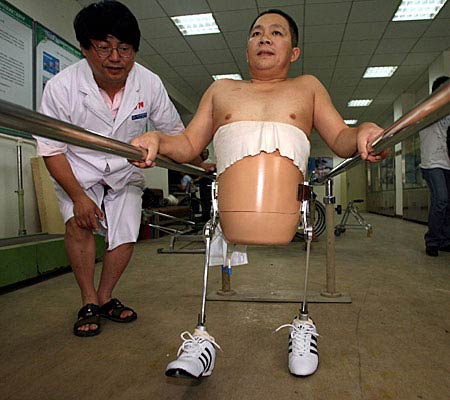
Link to more on the eggbot man

Posted in Thoughts and ideas | Leave a comment

Is an ‘H’ just a sideways ‘I’?

Today’s New York Times crossword puzzle was somewhat vexing. It was a Thursday puzzle, a day often given over to puzzle twists or innovations. The conceit of today’s puzzle was ‘Turn Turn Turn’, meaning that several answers were meant to be read by turning the puzzle 90, 180, or 270 degrees.

Some of the clues/answers were common for puzzles that use the upside-down word technique. For example, 43 Across was : Apollo 11 and 12 [180 degrees]. The answer, reading left to right, was ‘SNOISSIWNOOW’, with, for context, the last ‘W’ connecting to the word ‘GATEWAY’. And, of course, when you turn the puzzle 180 degrees, the word becomes ‘MOONMISSIONS’ or ‘moon missions.’

Completely acceptable, and a clever use of flexible letters like ‘O’ and ‘S’ that are read the same way upside down, and ‘W’ and ‘M’ that are still coherent letters when flipped. However, my problem came with the answers shifted 90 or 270 degrees. Take 61 Across : A specification on a burger order, [270 degrees]. The answer reading left-to-right was ‘ZOHZOOZ’. If you turn that 270 degrees, it supposedly reads ‘NOONION’ or ‘no onion’. But that’s only if you consider a sidways ‘H’ to be the same as an ‘I’. I don’t. In fact, I consider this a betrayal of crossword logic, but then I am a crossword fundamentalist. So, I turn to you once again: Is a sideways ‘H’ the same as a capital ‘I’?

[polldaddy poll=4069715]

Posted in Uncategorized | 2 Comments

Sing Me a Daisy

An Eidophone consists of a hollow funnel with a membrane stretched across it, and a tube attached to its base with a mouthpiece at the far end. Fine powder is sprinkled across the membrane. As you sing down the tube, resonant frequencies create harmonic patterns in the membrane, with peak areas of high amplitude, and node areas of stillness. As the harmonic is held, the powder jiggles away from the peaks and into the nodes, creating graphic formations. The interplay of different resonant frequencies produces results of increasing complexity, suggestive of the strange symbolic orders of both fundamental physics (cf. esp. resonance and string theory), and secret sects (cf. Glyconic snake cults, Russian mafia tattoos etc.).

The chesty Victorian singer Margaret Watts Hughes, who belted diatonic scales down an Eidophone for most of the 1880s, prefered floral interpretations. She would entice socially elite guests into her drawing room to witness her “sing a daisy”.

Margaret Watts Hughes Eidophone patterns

Margaret Watts Hughes Eidophone patterns

Posted in Knowledge | Leave a comment

Insulting or Not?

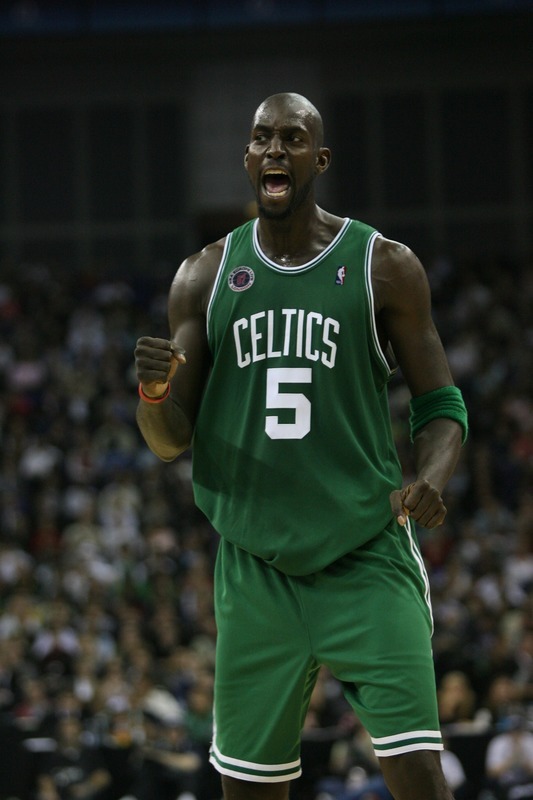
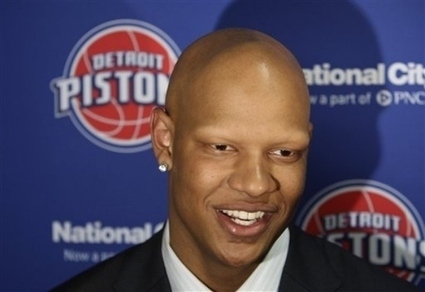
There is a scandal raging in Amercian sports circles at the moment because the basketball player Kevin Garnett allegedly told the basketball player Charlie Villanueva that he looked like a ‘cancer patient’. Now, this was during a heated moment in the game where players trash talk to try and unnerve opponents. In this context, I thought the barb was rather benign and half-humourous. The media world thinks not. Garnett is being attacked from all sides for being insensitive to a tragic community of cancer sufferers. In fact, he was forced to issue this clarification:

“My comment to Charlie Villanueva was in fact ‘You are cancerous to your team and our league,'” Garnett said. “I would never be insensitive to the brave struggle that cancer patients endure. I have lost loved ones to this deadly disease and have a family member currently undergoing treatment. I would never say anything that distasteful. The game of life is far bigger than the game of basketball.”

So, help me here: Am I terrible person for not seeing this as a despicable act? Is ‘cancer patient’ a slur of such hideous proportions that it needs to be policed?

[polldaddy poll=4035624]

Charlie Villanueva

Kevin Garnett
Posted in Uncategorized | Leave a comment

Bicycle Harvest

More madcap fun on the Left Coast of America. Wheeled Migration is organizing a costumed bike tour. Egad. And some of us sit here amid towering heaps of rotten garbage in the name of socialism.

Learn more at www.wheeledmigration.org.

Posted in KMZ Features | Leave a comment

A Question of Translation …

In the splendid Travels with a Tangerine, Tim MacKintosh-Smith touches briefly on a translation problem that has always preoccupied me: aesthetic vs literal.

In this case, he was looking at various translations for the title of Ibn Battutah’s accounts of his 14th century voyage to China and back. One literal translation is The Precious Gift of Lookers into the Marvels of Cities and the Wonders of Travel. However, MacKintosh-Smith prefers an aesthetic translation that maintains the rhythm and poetry of Arabic – the so-called ‘cooing of doves’ of the language. He suggests: An Armchair Traveller’s Treasure: the Mirabilia of Metropolises and the Wonders of Wandering.

Personally, I’ve always used a pop culture reference to describe the gulf between literal and aesthetic translation. In North America, there is a beloved animated character named ‘Dora the Explorer’ who travels the world, teaching kids about culture, geography, and self-sufficiency. In France, they have chosen a literal translation, ‘Dora l’exploratrice’, losing the charming rhyme. I would have preferred an aesthetic translation here, and named the character ‘Beatrice l’exploratrice’ in France.

So, what do you think? ‘Dora l’exporatrice’ or ‘Beatrice l’exploratrice’ ?

[polldaddy poll=3987356]

Posted in Uncategorized | 2 Comments

Lithopedion

A lithopedion, or “stone baby”, is a rare obstetrical abnormality which can occur with a failed, usually ectopic, pregnancy. The foetus is not discharged as happens with a traditional miscarriage, but instead remains inside the woman’s belly. The body then finds itself in a curious position: it does not view the foetus as alien, and therefore is unwilling to destroy it. At the same time, it cannot leave it as the tissue will decompose and present an infection risk. Instead, the body covers the still baby over with calcium, gently petrifying it, and keeping it.

Women may carry their lithopedions for years, stretching on into several decades (a case was reported in China in 2009 of a woman who had carried her lithopedion for 60 years). While a lithopedion may cause some abdominal discomfort, the women can lead otherwise healthy lives, and carry further successful pregnancies.

Once removed, the lithopedion looks like an Inuit sculpture, or a body cast from the volcanic rock which engulfed Pompey. Strange, and strangely beautiful.

wikipedia link, 60 year old chinese lithopedion link, an image link

Posted in Knowledge | Leave a comment

Running Eye Business Ideas #01: Golf Ballsy

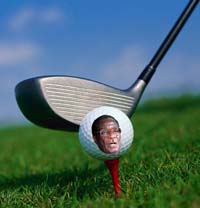
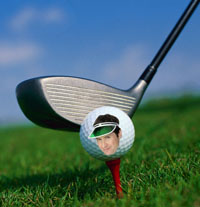
Releasing pent-up murderous energy by whacking golf balls has been scientifically proven to be psychologically healthy, excellent exercise, and good clean fun. Imagine the head of your chosen victim on the tee, and swing. Golf Ballsy brings this dream one step closer by offering clients a unique Print Your Own Golf Balls (PYOGB) service. Who’s no.1 on your whack-list? A cheating ex-lover? A swine of a boss? The guy on the card shoe who dealt you that crummy pair and then gathered away all your chips?

Just send in a headshot to Golf Ballsy and we’ll print up the balls for you! Or chose from our pre-printed range of most-whackable political leaders, obnoxious sports stars, historical motherfuckers etc.. Order individually, in 3 packs, 12 packs, or a bumper driving range bucket of 50.

Robert Mugabe golf ball

Robert Mugabe golf ball

croupier golf ball

croupier golf ball

Posted in Thoughts and ideas | Leave a comment

Anatomical illustrations from Edo-period Japan

Here is a selection of old anatomical illustrations that provide a unique perspective on the evolution of medical knowledge in Japan during the Edo period (1603-1868).

Edo-period medical illustration -- Edo-period medical illustration --
Pregnancy illustrations, circa 1860

These pregnancy illustrations are from a copy of Ishinhō, the oldest existing medical book in Japan. Originally written by Yasuyori Tanba in 982 A.D., the 30-volume work describes a variety of diseases and their treatment. Much of the knowledge presented in the book originated from China. The illustrations shown here are from a copy of the book that dates to about 1860.

* * * * *

Edo-period medical illustration -- Edo-period medical illustration --
Anatomical illustrations, late 17th century [+]

These illustrations are from a late 17th-century document based on the work of Majima Seigan, a 14th-century monk-turned-doctor. According to legend, Seigan had a powerful dream one night that the Buddha would bless him with knowledge to heal eye diseases. The following morning, next to a Buddha statue at the temple, Seigan found a mysterious book packed with medical information. The book allegedly enabled Seigan to become a great eye doctor, and his work contributed greatly to the development of ophthalmology in Japan in the 16th and 17th centuries.

* * * * *

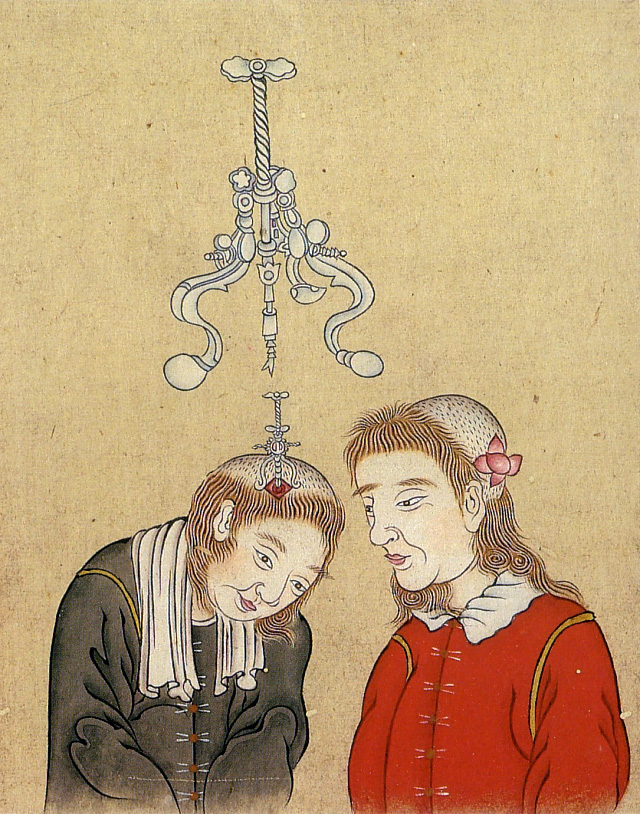
Edo-period medical illustration --
Trepanning instruments, circa 1790 [+]

These illustrations are from a book on European medicine introduced to Japan via the Dutch trading post at Nagasaki. Pictured here are various trepanning tools used to bore holes in the skull as a form of medical treatment.

Edo-period medical illustration --
Trepanning instruments, circa 1790 [+]

The book was written by Kōgyū Yoshio, a top official interpreter of Dutch who became a noted medical practitioner and made significant contributions to the development of Western medicine in Japan.

Continue reading

Posted in Reflections from elsewhere, Useful | Tagged , | Leave a comment

Digital Natives

Digital Natives by Duncan Alexander is a satire of Frederic Remington’s The Smoke Signal.

Posted in Reflections from elsewhere, Uncategorized | Leave a comment