Gnostic Justification for Eating Veal

I don’t eat animals for three main reasons: i) I think they are treated rather horribly on industrial farms; ii) widespread meat production is ecologically unsustainable in a world with 7 billion people; and iii) when I look at a dog and a pig (or a lamb or a cow) I don’t see any real difference between their nervous systems or their souls and I would never eat a dog.

That said, I am a sucker for arguments on behalf of omnivorism and I came across an astounding one while reading the Gnostic text The Gospel of Thomas. In it, Jesus says:

Blessed is the lion that the human will eat, so that the lion becomes human.

If I am interpreting this correctly, the argument states that it is better for the lion to be eaten by us than to roam free because in that moment between being chewed up and defecated into a toilet, a few lion cells are absorbed and eventually transformed into human flesh and it is only through this glorious union that the lion can ever know God.

Now, I have had many a discussion with Christians who believe that animals are fulfilling God’s destiny when they are eaten by us, but I have never heard the argument that we are doing animals a favour by eating them because we are bringing them closer to God. Admittedly, the Gnostic texts were declared heretical 16 centuries ago; but, nonetheless, I have to admire the chutzpah.

Posted in Uncategorized | Leave a comment

Amphibian Ball

Amphibian ball is a brand new sport combining the best of football, water polo and Peruvian mud wrestling. Run like a cheetah — swim like a sea snake — clamber like a frog — in a thrilling hurricane of passion and guile.

Amphibian ball is played in a swimming pool filled with a suspension of cornflour in water. The suspended starch particles present players with a Non-Newtonian shear thickening fluid: under slow pressure, the suspension flows like a liquid; under impact, it stiffens like brittle rock. This allows a sprinting amphiballer, with his feet pounding the surface, to tear up and down the pool as though it were a beach. Conversely, stationary players will sink slowly. Through a kind of hybrid of swimming and crawling, others may steal into position. Watch out — the fluid’s opacity can help the cunning amphiballer to lurk like a crocodile, with only his nostrils visible, before suddenly rising up to score like a Leviathan-Pele.

To find out more about amphibian ball, or to see where you can play near you, contact us through this website. Alternatively, start your own local league and register with the Fédération Internationale d’Amphibian Ball Association (FIABA). Amphibian ball is a licenced innovation of Kilometer Zero, and can only be played with an official Kilometer Zero Running Eye Eyeball.

Posted in Thoughts and ideas | Leave a comment

Axes and Burins

At first I did it with an ax – thin, slight but with weight, sharp, and with a solid easy-swing handle oiled and darkened from relentless swinging. This technique worked, but usually with a great deal of extra effort after the blow. After the blow would come the wrestling and the knees on the ground, reluctant reverence. I would be summoned for dangerous yanking, twists, back and forth swinging, and, if this didn’t work, hits and smashes to literally sledge hammer my beloved ax out or through. My little naughty adversary and all of his family tree would take my over-the-head strength with this long, thin axhead, accept it with silence, and hold tight. The dumb silence of this interaction can really get to you. Often enough, I repeatedly made a new, quite useless sledgehammer with a huge 33 cm long wooden mallet head. It is not smart to swing around very insecure, large pieces of wood on the end of a stick in the air and over the head. But this is what you have to do when you are like me, a city fool, and haven’t been made aware of only the most unchanged technology since the Stone Age.

Split wood burns more easily. The water comes out of it and it seasons better in the air. When we received five steres (one cubic meter) of soaking wood in the rain, sometimes in lengths which were really too wide to handle properly next to the glass woodstove door, or simply too big for it, splitting was necessary. I didn’t mind. I liked directly contributing to the warmth of my house, of my family. I can’t burn checks or cash for warmth, but wood is the next best thing. Continue reading

Posted in Interesting, Reflections from elsewhere, Useful | 4 Comments

The Mesmerizing Beauty of Many Tomatoes

While I was preparing files for a new version of my website, I made a single screen image of the results of my tomato experiment from a few years ago. I find it astoundingly beautiful. For the curious, more on the experiment *here*

Posted in Uncategorized | Leave a comment

Chairman Mao a Beckett Reader?

This is one of the quotations from The Quotations From Chairman Mao Tse Tung, better known as The Little Red Book:

“Make trouble, fail, make trouble again, fail again … til their doom; that is the logic.”

The grim, inescapable, but also perversely humorous philosophy encapsulated within the quote bears the unmistakable overtones of Samuel Beckett — whose Complete Works could probably be subtitled “Make trouble, fail, make trouble again, fail again” without raising many eyebrows, or rattling many coughs. Whence this peculiar resonance between the two? Could it be that Mao Tse Tung was a Beckett reader?

Mao certainly was a reader and a lover of literature. To the dismay of his various minions and committees, he would frequently take time out from the heavy fare of political-atrocity-wreaking to spend a few days in bed surrounded by books, and maybe a girl or two. He even penned a few volumes of poetry himself.

The most obviously aligned (and oft-quoted) Beckett line comes from Worstword Ho:

“All of old. Nothing else ever. Ever tried. Ever failed. No matter. Try again. Fail again. Fail better.”

But are we moving the moon with the tide here? Isn’t it perhaps the other way around? Beckett published Worstword Ho in 1983, while Mao’s quote, reproduced in The Little Red Book (1964), originally comes from the 1949 essay ‘Cast Away Illusions, Prepare for Struggle’.

Was Beckett in fact a Mao reader?

Posted in Knowledge | Leave a comment

On First Looking into Walker’s I Ching

Accept the rising of the sun.
Accept the sinking of the sun.
Accept the rising of the moon.
Accept the sinking of the moon.

A.H. 01/2011
cp. Keats on Chapman’s Homer

Posted in Thoughts and ideas | Leave a comment

Polly’s

I recently received a note from the California artist Ken Christensen. He spent a lot of time in Paris in the 1980s, including a spell at Shakespeare and Company. He was recently back in the city and was horrified by the transformation of his favourite drinking spot, Polly Magoo’s, from classic Paris dive to antiseptic tourist trap. The new incarnation, he wrote, was ‘a mockery of what it once was.’

Ken kindly passed on a sketch he made of the original bar in 1982. More of his work can be seen at www.kenchristensen.net

Posted in Uncategorized | Leave a comment

Best $10 Ever Spent

The efficacious among you can stop reading right now. But those of you who find yourself procrastinating by, oh, I don’t know, spending two hours searching for Internet rumors about Adrian Mutu’s possible transfer to Olympique de Marseille, this is for you.

Freedom it’s called. It shuts off the Internet for a set period of time and you can’t override it. Which means you can work distraction free for 90 minutes or three hours or whatever you choose. It’s pathetic that I need it; but it’s awesome that it’s there. Hell, Nora Ephron and Nick Hornby swear by it, so I guess I can too.

Posted in Uncategorized | Leave a comment

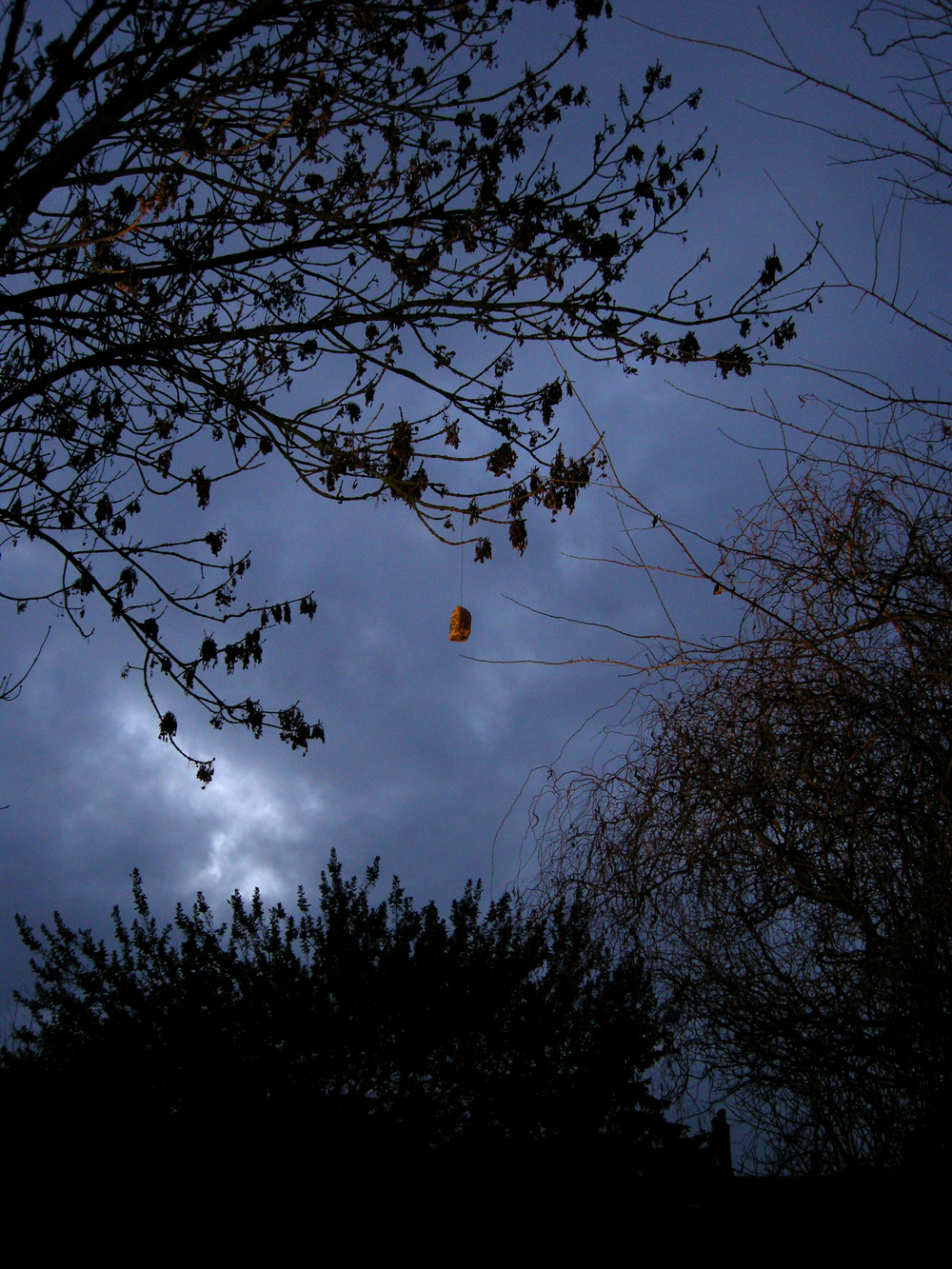
Christmas Cake Sky Burial

Chirstmas Cake Sky Burial

Ok. 2011. Let’s get the heck on with it.

Posted in Beautiful | Leave a comment

From a Bookseller in Prague

“Who’s that Kafka guy?” I’m being asked, and not for the first time. I’m trying not to answer, but at the same time I’m remembering what a good time I had reading Kafka’s novels and stories years ago, and how not having read his letters or diaries, it’s striking me now that I maybe don’t know. Who is that Kafka guy? Really? “I’m not too sure,” I say. I turn to the computer and immediately order all Kafka’s letters and diaries. (Shockingly they’re out of print, but are available through Abebooks).

It turns out they’re all absolute masterpieces and should be read over and over. Take his Letters to Milena for example. She was his first translator, a brilliant Czech journalist who eventually died in a concentration camp. She would write to him in Czech and he would, as always, reply in German:

“Dear Frau Milena,
Continue reading

Posted in Knowledge, Reflections from elsewhere | Leave a comment